Memphis Historic Homes And Neighborhood Character
June 18, 2026
June 18, 2026
If you picture Memphis as one kind of housing market, historic neighborhoods quickly prove otherwise. In just a few miles, you can move from landmark Victorian homes near downtown to bungalow-lined Midtown streets and then to brick cottages and early ranch homes in postwar districts. If you are trying to find the right fit, understanding that neighborhood character can save you time, sharpen your search, and help you buy with more confidence. Let’s dive in.
Memphis has a layered housing story shaped by several development eras. Victorian Village preserves some of the city’s oldest surviving residential fabric near downtown, while neighborhoods like Central Gardens, Cooper-Young, Evergreen, and Vollintine-Evergreen grew during the streetcar and parkway era in Midtown.
Later, areas such as East Buntyn, High Point Terrace, and Green Meadows-Poplar Glen reflected the city’s shift toward more automobile-oriented suburban growth. That pattern is a big reason Memphis offers such a compact but unusually varied mix of Craftsman bungalows, foursquares, revival-style cottages, and postwar ranches.
If you are drawn to Memphis’s oldest residential character, Victorian Village stands out. The district dates from the mid-1800s to the 1890s and includes French and Italianate Victorian homes along with Greek Revival examples.
Today, many of those surviving properties serve different uses, including museums, offices, and private residences. That gives the area a landmark-rich feel that is different from the mostly residential character you see in many other Memphis historic districts.
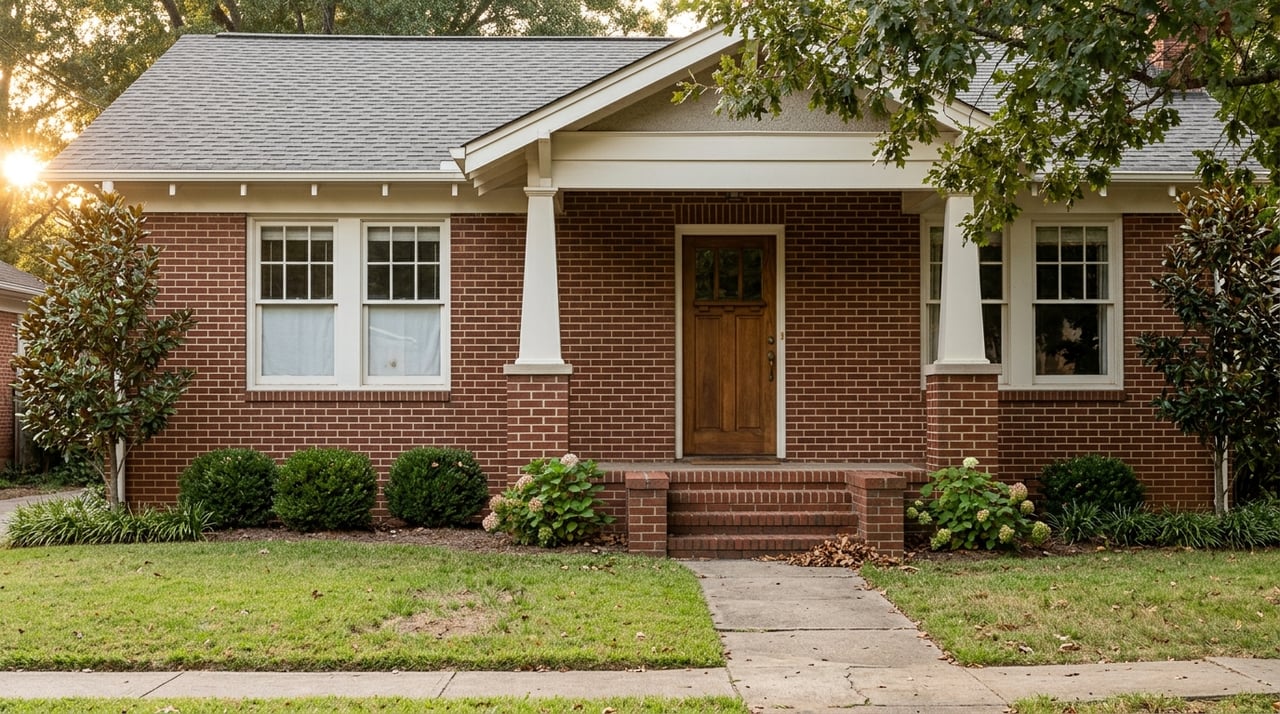
For many buyers, the classic Memphis character-home image starts here. Central Gardens includes Four Square, Bungalow, Queen Anne, Greek Revival, and Colonial Revival styles, while Cooper-Young is known for Bungalow or Craftsman, Colonial Revival, and Queen Anne homes.
You also see strong bungalow influence in Annesdale-Snowden and Vollintine-Evergreen. In those neighborhoods, the architecture often mixes Craftsman features with Colonial Revival, Tudor Revival, and other early-20th-century details.
Not every historic home in Memphis is ornate or oversized. In postwar districts, you are more likely to find smaller brick cottages, Minimal Traditional homes, Cape Cottage forms, and early ranch styles.
East Buntyn, High Point Terrace, Green Meadows-Poplar Glen, and Parkway Woods help define this side of Memphis character. These neighborhoods often offer a simpler exterior profile and a different renovation scope than earlier Midtown districts.
Central Gardens is one of Memphis’s signature preservation neighborhoods. It covers 511 acres, includes more than 40 subdivisions, 83 blocks, and 1,540 structures, and is arranged around greenways, boulevards, and shared open space.
What many buyers notice first is that it feels established and architecturally varied rather than uniform. If you want mature trees, porch appeal, and a broad mix of historic styles, this is often one of the first neighborhoods to study.
Cooper-Young has a more energetic, urban feel than some other historic areas. The district developed from 1880 to 1940 and includes Bungalow or Craftsman, Colonial Revival, and Queen Anne homes.
It is also known for its concentration of local businesses and restaurants, which shapes how the neighborhood feels day to day. If you want character architecture in a lively, close-in setting, Cooper-Young usually belongs on your list.
Evergreen and Vollintine-Evergreen are strong options if you like cohesive streets and a visible preservation identity. Evergreen is a 53-block district shaped by streetcar service and the Parkway system.
Vollintine-Evergreen contains 67 blocks and 3,218 contributing resources, and it is described as one of the largest cohesive collections of eclectic-style houses in Memphis. For buyers, that often translates to a strong sense of continuity from block to block, while still offering architectural variety.
Annesdale-Snowden offers an early-20th-century bungalow district with its own distinct feel. Built from 1906 to 1929, it is characterized by large-scale bungalows and Craftsman homes with Colonial Revival and Tudor Revival influences.
If your search is centered on bungalow architecture, this neighborhood is worth a close look. It gives you a focused historic identity without feeling identical to Midtown’s other well-known districts.
These neighborhoods lean more toward middle-class, auto-era residential character than grand older inner-ring suburb patterns. East Buntyn developed east of the Memphis Country Club in the 1920s and 1930s, while High Point Terrace is a mid-century suburban district with an intact postwar shopping center.
Green Meadows-Poplar Glen preserved a mix of Cape Cottage, Minimal Traditional, Colonial Revival, and early Ranch styles. If you prefer postwar charm, smaller cottage-scale homes, or ranch-style living, these areas may feel more practical and approachable for your goals.
Buying a historic or character home in Memphis is not just about style. It is also about understanding the difference between a home with historic significance and a home located in an area with local review requirements.
A property’s listing on the National Register does not automatically place federal restrictions on a private owner. In Memphis, the practical issue is whether the property sits in a local Historic Overlay District.
If a home is in a local Historic Overlay District, the Memphis Landmarks Commission reviews visible changes from the street or public right-of-way. That can include new construction, exterior alterations, additions, site improvements, relocation, and demolition.
The commission uses design guidelines to decide whether proposed work is appropriate. For buyers, that means it is smart to ask early about district status, especially if you are already thinking about exterior updates or additions.
In many cases, your budget expectations should be tied more to neighborhood and property condition than to the word historic itself. Midtown character-home districts often draw interest for older architecture, mature street trees, and more walkable surroundings.
By contrast, East Memphis and postwar districts often offer a simpler ranch-or-cottage profile and a different renovation scope. That does not make one better than the other. It simply means the right fit depends on the kind of home, setting, and project level you want.
If you are early in your search, it helps to match your priorities to the kind of neighborhood character you want most.
When you tour Memphis historic neighborhoods, try to look beyond the label and focus on how the area actually fits your lifestyle and housing goals. Two districts can both be considered character-rich but offer a very different streetscape, home size, lot pattern, and renovation path.
It also helps to compare the feel of the block, the mix of home styles, and the kind of updates you would want to make over time. A responsive local team can help you sort through those details so you are not just buying charm, but choosing the right kind of charm for you.
Whether you are comparing Midtown bungalows, downtown-era landmarks, or postwar cottages in East Memphis, the right guidance makes the process easier. If you want help narrowing your options and understanding how Memphis neighborhood character lines up with your goals, reach out to Holtermann Home Team to schedule your free consultation or get a free home valuation.
Whether you're buying, selling, or investing, we'll work tirelessly to help you achieve your goals and exceed your expectations. Let our family help yours find the perfect home!