Home Styles You’ll Find Around Bartlett, TN
June 4, 2026
June 4, 2026
Wondering what kind of homes you’ll actually see when you start exploring Bartlett, TN? That is a smart question, because Bartlett is not a one-style market. You’ll find a mix of older brick homes, ranch layouts, and newer subdivision builds, and understanding those differences can help you narrow your search faster. Let’s take a closer look at the home styles you’ll find around Bartlett.
Bartlett is best understood as a mostly detached, owner-occupied suburban housing market. City and Census data show that detached single-family homes make up the clear majority of the housing stock, with about 92% of homes classified as single-unit housing and an owner-occupied rate of 85.6%.
That matters when you begin your home search. In practical terms, you are far more likely to tour traditional single-family homes than attached properties, condos, or apartments. If you want a suburban setting with a strong ownership presence, Bartlett lines up well with that preference.
The city also has roughly 57,000 residents and 20,665 housing units, with a median owner-occupied home value of $310,400. Those numbers help frame Bartlett as an established suburban market with a wide range of resale options, especially for buyers looking for more space than they may find in denser parts of the Memphis area.
If you are drawn to homes with more individuality, Bartlett’s older areas may stand out right away. Historic Bartlett, Old Historic Bartlett, Bartlett Station, Elmore Park, and Davies Plantation are some of the clearest places where you’ll see older and more established housing patterns.
These areas tend to feel less like repeated subdivision planning and more like a collection of individual homes built over time. The city’s historic preservation approach also plays a role here, especially in the historic district, where design guidelines help maintain the area’s older visual identity.
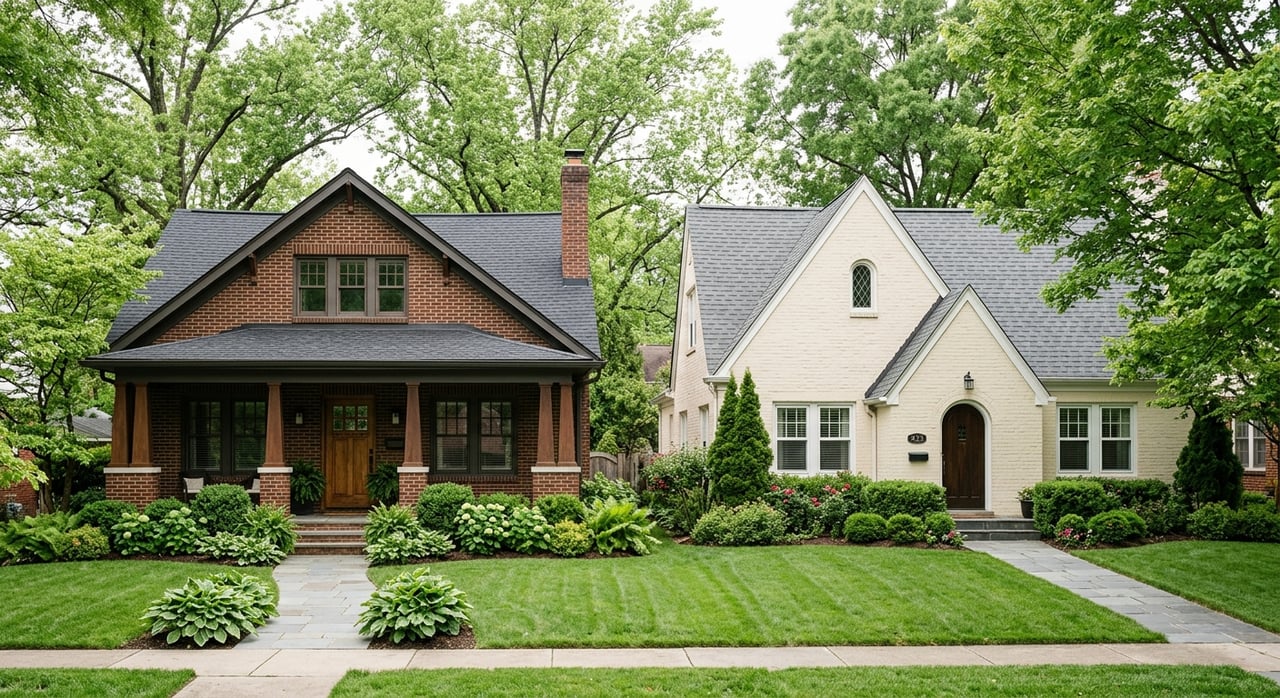
In older Bartlett pockets, buyers are likely to see one-story ranch homes and traditional brick houses from the 1950s and 1960s. Recent listing examples in areas like Elmore Park and Davies Plantation show simple footprints, brick veneer exteriors, composition-shingle roofs, and mature lots.
These homes often appeal to buyers who want practical layouts and established surroundings. A one-story design can be especially attractive if you prefer fewer stairs, while the traditional brick exterior is a common and familiar look across Bartlett’s older housing stock.
One of the biggest visual differences in older Bartlett is lot size. Some resale examples in these established areas sit on lots around 1 to 1.5 acres, which is much different from the tighter lot patterns you often see in newer subdivisions.
Mature trees are another key clue. In many older parts of Bartlett, the lot itself becomes part of the home’s appeal, with deeper setbacks, established landscaping, and a setting that feels more rooted over time.
Bartlett also has a strong newer-home story, especially in subdivision-style development that expanded during the city’s major growth years. The city notes that Bartlett grew rapidly in the 1970s and 1980s through new residents and annexation, especially to the east and north.
Today, that pattern helps explain why many neighborhoods in Bartlett feel coordinated in design. The presence of more than 70 active HOA and neighborhood-watch groups also suggests that many residential areas were developed with a planned subdivision structure rather than older block-by-block growth.
In newer Bartlett neighborhoods, you are more likely to see larger two-story traditional homes. Communities like Walker Farms, Brunswick Farms, and Rivercrest are helpful examples of this style direction.
These homes often include 4 to 5 bedrooms, larger square footage, and garages built for everyday suburban living. Compared with older ranch homes, the overall look usually feels taller, wider, and more garage-forward from the street.
Another common feature in newer Bartlett homes is a more layered exterior design. Instead of simple all-brick fronts, newer homes may combine brick with board-and-batten details or stone accents.
That gives many streets a more updated suburban look while still fitting the regional preference for brick-based exteriors. In communities like Walker Farms, this mix of materials is part of the neighborhood’s visual character.
Inside, newer Bartlett homes often include features that support flexible daily living. Builder and listing examples from Walker Farms, Brunswick Farms, and Rivercrest mention bonus rooms, formal dining rooms, family rooms, hearth rooms, covered patios, and walk-in attic storage.
Those details can matter if you need space for work, hobbies, guests, or everyday storage. If your wish list includes a larger kitchen-to-living flow, extra gathering space, or a backyard patio setup, newer subdivisions may offer more of those options.
If you are trying to picture the difference quickly, this side-by-side view can help.
| Feature | Older Bartlett Homes | Newer Bartlett Homes |
|---|---|---|
| Common layout | One-story ranch or simple traditional | Larger two-story traditional |
| Exterior look | Mostly brick veneer | Brick with board-and-batten or stone accents |
| Lot pattern | Often larger, tree-filled lots | Planned subdivision lots |
| Outdoor feel | Mature trees and established yards | Covered patios and more uniform streetscapes |
| Interior extras | Simpler original footprints | Bonus rooms, formal dining, extra storage |
Neither style is automatically better. It really comes down to what fits your goals, whether that is charm and lot size, or newer layouts and added flex space.
If you want Bartlett homes with older architecture, established lots, and a less uniform feel, start by watching areas such as Historic Bartlett, Old Historic Bartlett, Bartlett Station, Elmore Park, and Davies Plantation.
These parts of the city are some of the strongest reference points for Bartlett’s earlier residential identity. As inventory changes, the exact options will vary, but this is where older home styles are most likely to show up.
If you are looking for newer construction or move-up style homes, Walker Farms, Brunswick Farms, Rivercrest, and newer subdivisions north of Stage Road are useful places to focus.
These areas better represent the larger-home suburban model many buyers associate with modern Bartlett living. You are more likely to see coordinated streetscapes, bigger garage footprints, and floor plans designed around today’s common space needs.
Yes, but they are the exception rather than the rule. Bartlett is overwhelmingly a detached single-family market by structure type, so attached options are not the main story here.
That said, the city’s neighborhood list includes communities such as Bartlett Place Townhomes HOA and The Highlands of Bartlett Condos. If you want lower-maintenance living, those options may be worth exploring, but your overall selection will be more limited than the single-family inventory.
When you tour Bartlett homes, it helps to look beyond the style label and focus on how the home actually lives. Two houses may both be described as traditional, but the age, lot size, layout, and neighborhood pattern can create very different day-to-day experiences.
As you compare homes, pay close attention to:
A clear sense of these priorities can make your search more efficient. It can also help you avoid chasing homes that look good online but do not match the way you want to live.
Bartlett is not just a place with houses. It is a market with distinct housing eras, and those eras show up clearly in the homes you tour.
You may find yourself choosing between an older brick ranch on a larger, tree-filled lot and a newer two-story home with bonus space and a covered patio. Knowing that contrast upfront gives you a better way to search, compare, and make confident decisions.
If you want help narrowing down which Bartlett home styles fit your budget, timeline, and daily needs, the Holtermann Home Team is here to help with local guidance, responsive communication, and a more personalized home search.
Whether you're buying, selling, or investing, we'll work tirelessly to help you achieve your goals and exceed your expectations. Let our family help yours find the perfect home!